Risk Management Using AI in Trading
January 2026 · Softfire
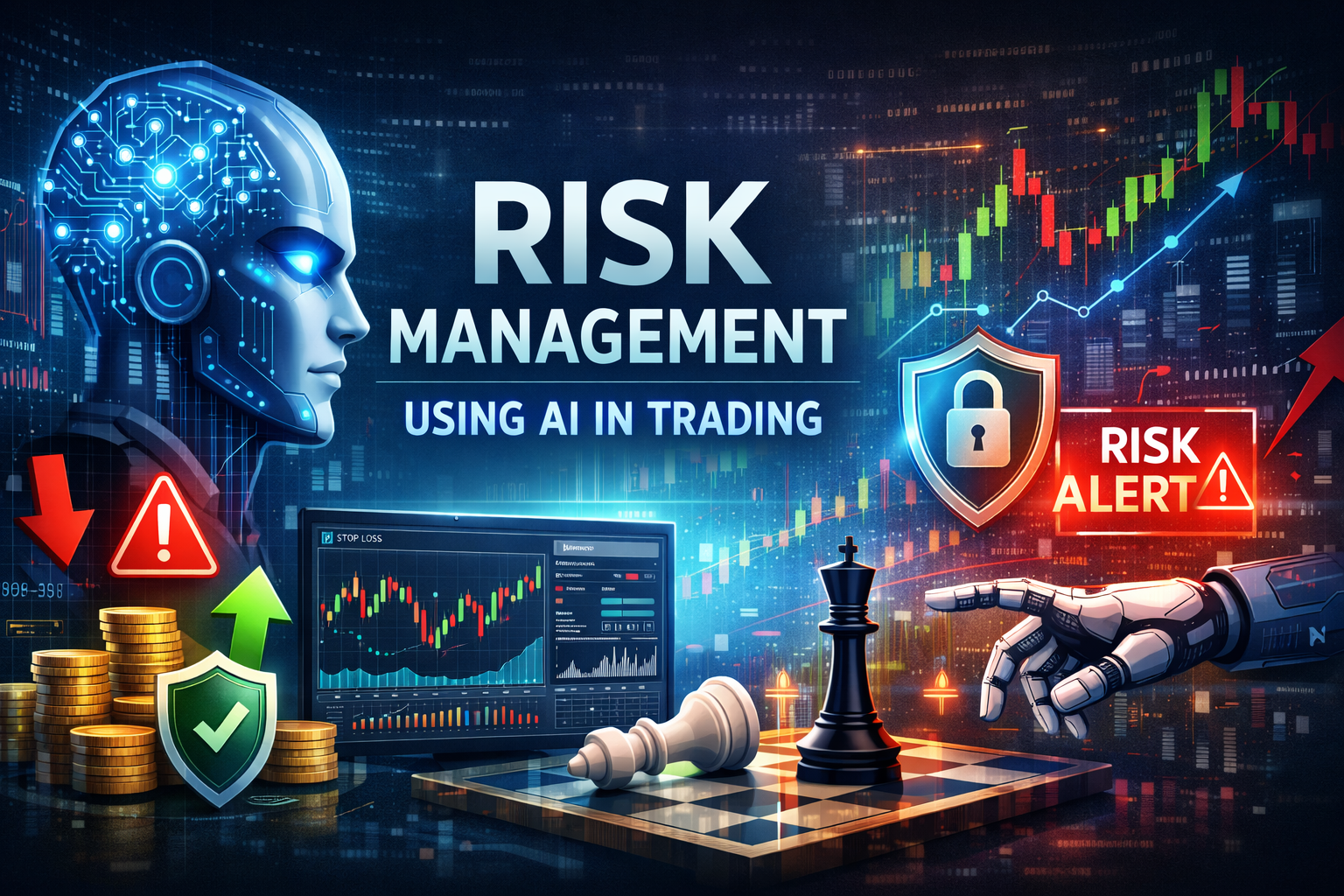
Risk Management Using AI
Risk is part of every decision an organization makes. Whether it is a bank approving a loan, a manufacturer managing supply chains, or a hospital protecting patient data, uncertainty is always present. Traditionally, risk management relied on historical data, human judgment, and static models that were updated infrequently. While these methods worked to a degree, they often struggled to keep up with fast changing environments and complex data. This is where artificial intelligence is reshaping the field.
Risk management using AI is not about replacing human decision makers. It is about strengthening their ability to detect, understand, and respond to risk in a smarter and more timely way. By analyzing large volumes of data, identifying patterns that humans may miss, and adapting as conditions change, AI has become a powerful tool for managing uncertainty across industries.
Understanding Risk Management in a Modern Context
At its core, risk management is the process of identifying potential threats, assessing their impact, and taking steps to reduce or control them. These threats can be financial, operational, strategic, legal, or related to reputation and compliance.
In the past, risk assessments were often periodic. Teams reviewed reports quarterly or annually and adjusted policies based on past events. The problem with this approach is that many risks today evolve quickly. Cyber attacks, market volatility, fraud schemes, and supply chain disruptions can emerge and escalate in days or even hours.
AI allows risk management to move from a reactive model to a more proactive and continuous one. Instead of relying only on what happened before, AI systems can analyze what is happening right now and what is likely to happen next.
How AI Enhances Risk Identification
One of the most valuable contributions of AI is its ability to identify risks early. AI systems can process structured data like financial records as well as unstructured data such as emails, customer reviews, sensor readings, and news articles.
Machine learning models are trained to recognize patterns associated with risk events. For example, in finance, AI can analyze transaction data to spot unusual behavior that may indicate fraud. In manufacturing, it can monitor equipment data to detect signs of failure before a breakdown occurs.
Because AI can analyze data continuously, it reduces the chance that early warning signs are overlooked. This early detection gives organizations more time to respond, often lowering the cost and impact of risk events.
Risk Assessment and Prediction with AI
Once risks are identified, the next step is to assess their likelihood and potential impact. AI excels at this because it can handle complex relationships between variables.
Traditional risk models often rely on fixed assumptions. AI models, on the other hand, can learn from new data and adjust their predictions over time. For example, an AI system used for credit risk assessment can refine its understanding of borrower behavior as economic conditions change.
Predictive analytics powered by AI helps organizations prioritize risks, understand potential damage, and evaluate how risks interact with one another.
Conclusion
Risk management using AI represents a major shift in how organizations deal with uncertainty. By enabling faster detection, deeper analysis, and more informed decision making, AI helps businesses move from reacting to risks to anticipating them. When used responsibly, it supports more resilient and confident organizations.